
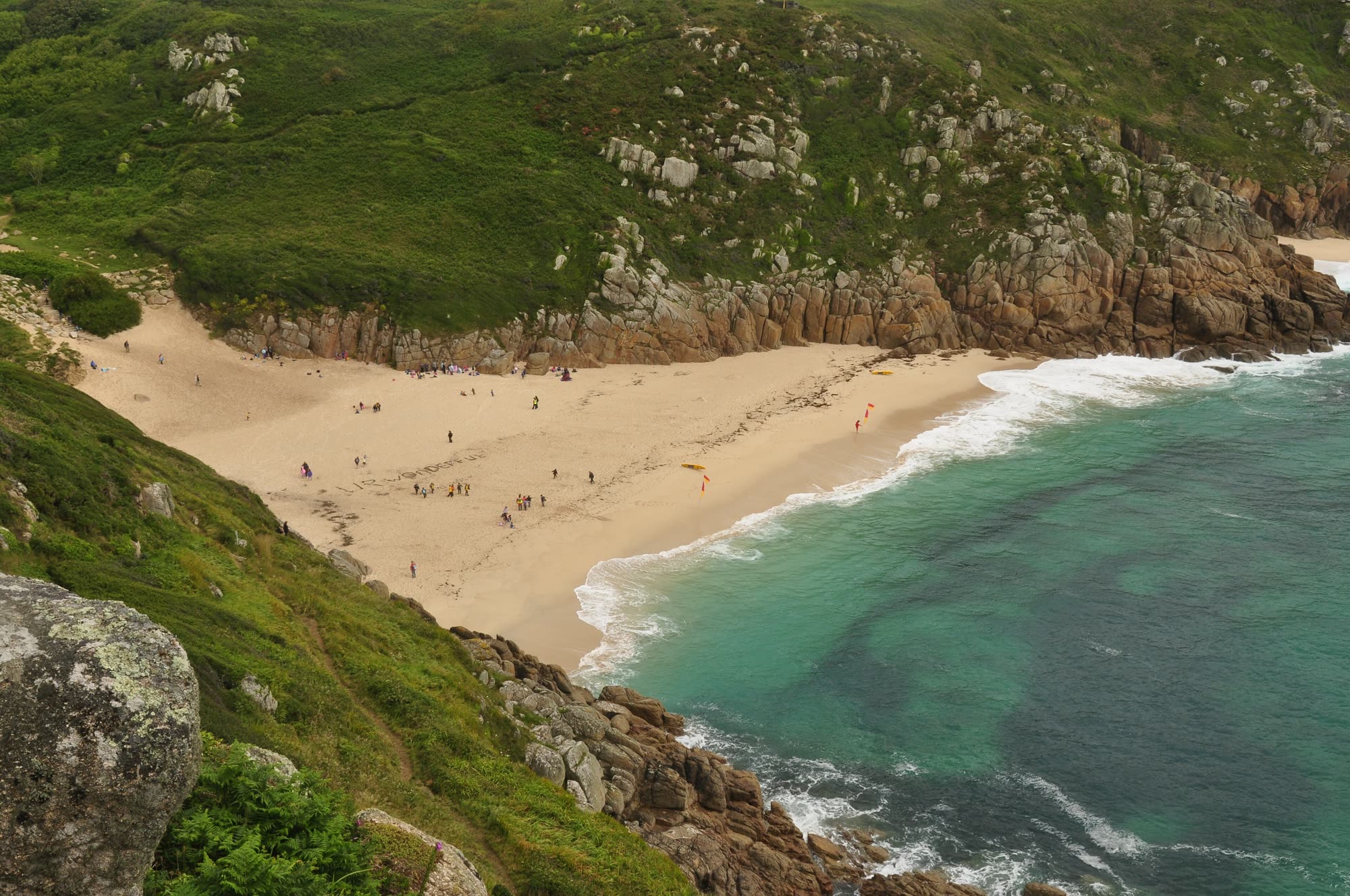
Porthcurno in Cornwall, consistently among the best UK family holiday beaches. Photo: Nilfanion (2011), CC BY-SA 4.0.
The best UK family holiday is the one that fits your children’s ages, your budget and the dates you can actually get away. Cornwall and the Lake District suit active, outdoorsy families, Norfolk and Dorset suit younger children, and a holiday park or self-catering cottage almost always beats a cramped hotel room. Here is how to choose, and when to book.
Choose your region first
Different parts of the UK suit different ages and styles of holiday. Match the region to your family rather than following the crowd.
| Region | Best for ages | When to go | Why families love it |
|---|---|---|---|
| Cornwall | 0-16 | May, June, September | Beaches, surfing and bucket-and-spade days |
| Devon | 0-14 | Late spring, early autumn | Two coastlines and gentle family resorts |
| Dorset | 0-12 | June, September | Jurassic Coast fossil hunting and sandy bays |
| Wales | All | May, September | Mountains and coast, with Pembrokeshire’s beaches |
| Lake District | 4-16 | Late spring, early autumn | Lakes, fells and boating on Windermere |
| Yorkshire | All | Summer, autumn | Coast, Dales and the city of York in one trip |
| Scotland | 5-16 | May, June, September | Highlands, lochs and wildlife |
| Norfolk | 0-10 | Summer | The Broads, sandy beaches and quiet roads |
Cornwall and the Lake District are the obvious favourites, but they also get the busiest in July and August. Dorset and Norfolk are gentler for toddlers and easier on the drive, while Scotland and Wales reward families who like walking, wildlife and space.
Holiday parks, cottages or hotels
Holiday parks
Holiday parks win on entertainment and ease. On-site pools, evening entertainment and kids’ clubs keep children busy without the car, and static caravans give you separate bedrooms for a lower cost than most hotels. The trade-off is space and privacy, and peak-season parks can be lively rather than peaceful.
Self-catering cottages
A cottage gives you a kitchen, a washing machine and room to spread out, which matters more the younger your children are. You buy your own food and set your own pace, and cottages in Cornwall, Devon and Norfolk are plentiful. They tend to book up fastest for summer, so reserve early.
Hotels
Hotels suit short breaks and city trips more than week-long beach holidays. For families, look for interconnecting or family rooms, and check whether breakfast and parking are included before comparing prices, because the extras add up quickly.
School-holiday and half-term timing strategy
The single biggest lever on cost and crowds is when you travel. School holiday dates in the UK are set by local authority rather than nationally, and Scotland’s term dates differ substantially from England and Wales, so always check your own school’s calendar before booking.
For the 2026/27 academic year, most of England and Wales has October half term in the week of 26 to 30 October 2026, with the Christmas break running to the first week of January 2027. February half term 2027 falls in the week of 15 to 19 February for most of England and 8 to 12 February in Wales, and the May half term is the week of 31 May to 4 June 2027. Scotland runs a week or more earlier on several of these breaks. Dates vary by council and academy trust, so confirm yours using the GOV.UK school term dates look-up.
The practical strategy is to travel in the shoulder seasons, the weeks just before or after the main summer rush. Late May, early June and September offer the same beaches and attractions with fewer crowds and lower prices. If you are tied to school dates, book the most popular regions and accommodation at least six months ahead, and remember that in England a family holiday during term time is generally not considered an exceptional circumstance for authorised absence.
Matching the region to your children’s ages
For babies and toddlers, prioritise a short drive, a beach with shallow water and a base with a kitchen and washing machine, which points to Norfolk, Dorset or the gentler south coast of Cornwall. For primary-school children, Cornwall, Devon and the Lake District offer the beaches, boats and short walks that hold attention. For teenagers, add surf on the north Cornish coast, adventure activities in Wales and Scotland, and cities such as Edinburgh and York that mix history with places to wander independently.
What affects the cost of a UK family holiday
The biggest factor is timing. A week in the same cottage can cost far more in the summer holidays than in June or September, so shifting dates by a week or two is the single most effective way to save. Region matters too: Cornwall, the Lake District and the south coast command a premium, while Wales, Yorkshire, Norfolk and Scotland tend to run cheaper for comparable accommodation. Finally, how you eat moves the needle, with self-catering cottages and holiday parks with kitchens usually working out far cheaper than hotels with restaurant meals every night.
A quick planning checklist
Before you book, confirm your school’s exact term dates rather than assuming national ones, then check availability for your chosen accommodation as early as possible, since popular cottages book out six to twelve months ahead for summer. Decide your base first and build day trips around it rather than moving every night, and pre-book one or two rainy-day activities so the weather cannot derail the whole trip. Finally, check cancellation terms before paying, because family plans change.
Think about the journey as part of the trip. A long drive to Cornwall with young children is easier split with a stop, while rail to Edinburgh or York turns the travel day into part of the adventure. Wherever you go, travel outside peak times and pack snacks, layers and a change of clothes within easy reach rather than buried in the boot.
Where to stay, region by region
Compare family accommodation in each region to find the right base.
- Family stays in Cornwall
- Family stays in Devon
- Family stays in Dorset
- Family stays in Wales
- Family stays in the Lake District
- Family stays in Yorkshire
- Family stays in Scotland
- Family stays in Norfolk
Things to do on a UK family holiday
Book a few key activities ahead so the weather does not dictate the whole trip.
Frequently asked questions
Where is the best place in the UK for a family holiday?
It depends on age and taste. Cornwall and the Lake District are the classic choices for active families, Dorset and Norfolk are gentler for toddlers, and Wales and Scotland offer coast and mountains with more space. Match the region to your children’s ages rather than picking the most popular name.
When are the UK school holidays in 2026?
Most of England and Wales has October half term from 26 to 30 October 2026, February half term from 15 to 19 February 2027 (8 to 12 February in Wales), and May half term from 31 May to 4 June 2027. Scotland differs, and dates vary by local authority, so check your school and the GOV.UK term dates look-up.
Is a holiday park or a cottage better for families?
Holiday parks win on entertainment and cost, with pools and kids’ clubs on site. Cottages win on space, privacy and having your own kitchen. For a week by the beach with young children, many families prefer a cottage or a park; for guaranteed entertainment and minimal planning, a holiday park is hard to beat.
Is it cheaper to holiday in term time?
Usually, yes, because accommodation prices fall sharply outside the main school holidays. But in England a family holiday during term time is generally not treated as an exceptional circumstance for authorised school absence, so weigh any saving against the rules on attendance.
More family holiday planning from British Mama
Ready to narrow it down? Read our deep dive on family holidays in Cornwall, our guide to family weekend breaks in the UK, or browse the full UK holidays hub.
Things to do
Tours and activities
Family-friendly tours and tickets near this topic, bookable via GetYourGuide.
Tours are sold by GetYourGuide and run by local operators. If you book one through these links, we may earn a commission at no cost to you. Ratings and prices are GetYourGuide’s. See our affiliate disclosure.