
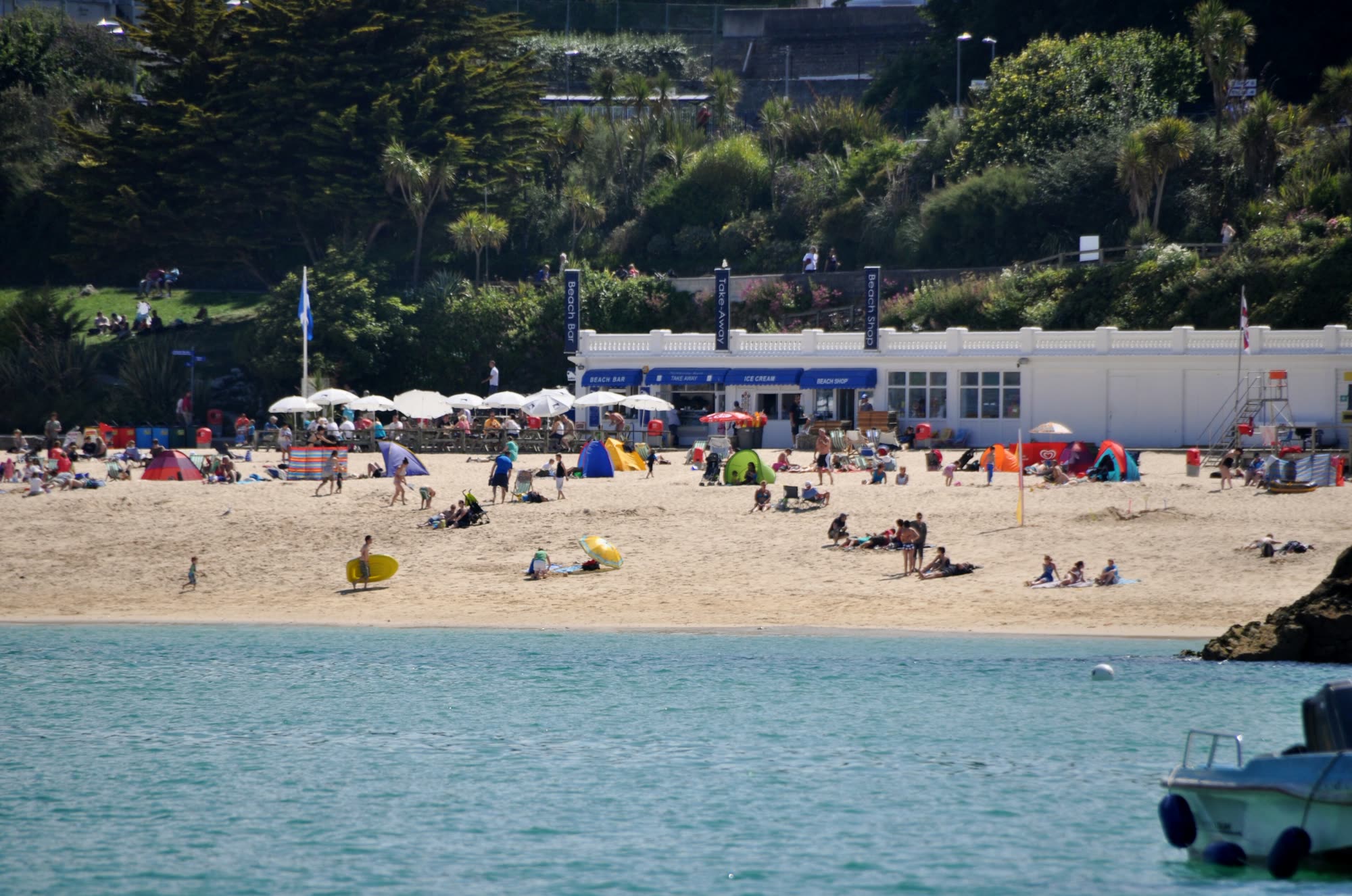
Porthminster Beach at St Ives, Cornwall. Photo: St Ives : Porthminster Beach by Lewis Clarke (2011), CC BY-SA 2.0.
Cornwall works for families because the fundamentals are right: sandy beaches with lifeguard cover in season, three well-known bases that suit different budgets, and enough wet-weather backup to survive a British summer. Choose your coast and your base first, then time the trip to dodge the crowds. Here is how.
North coast vs south coast
Cornwall’s two coastlines feel quite different. The north coast, around Newquay, Polzeath and Perranporth, faces the Atlantic and delivers the big surf, wide golden sands and the liveliest resort energy. It is best for older children who want to bodyboard and families who like a buzzy, well-serviced beach.
The south coast, around Falmouth, St Ives Bay and the Lizard, is generally more sheltered, with calmer water that suits paddling and younger children. Beaches such as Gyllyngvase near Falmouth and Porthminster at St Ives sit on the south side and are routinely named among Cornwall’s best for families. For toddlers, the south coast is the safer starting point.
The best family beaches in Cornwall
These are the beaches that combine sand, shelter and facilities, with lifeguard cover confirmed for the main season. Always swim between the red and yellow flags and check the RNLI lifeguard finder before you go.
- Gyllyngvase, Falmouth: a Blue Flag, gently sloping beach a short walk from Falmouth town, with a cafe on the sand, toilets and lifeguard cover from May to September.
- Porthminster, St Ives: white sand and calm water a five-minute walk from St Ives station, with a Blue Flag, toilets and lifeguards from mid-May to September.
- Polzeath: a huge, level beach with rock pools and lifeguards from Easter to the end of October, plus shops, cafes and toilets right behind it.
- Summerleaze, Bude: wide golden sand with a tidal sea pool, RNLI station, toilets and showers, and lifeguard cover from Easter onwards.
- Porth Beach, Newquay: a sheltered sandy beach on the edge of Newquay with a shallow stream for paddling, rock pools, and lifeguard cover from May to September.
- Praa Sands: a long south-coast beach with easy access, parking, a cafe and lifeguard cover from May to September.
Where to base: St Ives, Newquay or Falmouth
St Ives
St Ives is the prettiest base, with picture-postcard harbour views and several beaches within walking distance. It is also the busiest and among the pricier options in summer, and the narrow streets and parking make it less convenient with a pram or lots of kit. It suits families who want to park the car and walk everywhere.
Newquay
Newquay is Cornwall’s surf capital and the best base for older children, with multiple beaches, surf schools and a full spread of family attractions including an aquarium. It is livelier and more commercial than the other two, which some families love and others avoid in peak weeks.
Falmouth
Falmouth is the most practical family base: a proper town with supermarkets, a sheltered bay, the maritime museum and easy day trips to the Lizard and the Helford. It is calmer than Newquay and less crowded than St Ives, and Gyllyngvase beach on its doorstep is one of the county’s best for children.
Cottages versus holiday parks
Cornwall does both well. Self-catering cottages dominate the county and give you a kitchen, a washing machine and room to spread out, but the best ones book out months ahead for summer. Holiday parks, concentrated around Newquay and Perranporth, offer on-site pools and entertainment and tend to be cheaper, with the trade-off of less privacy and more seasonal crowds. For a first Cornwall trip with young children, a cottage near a south-coast beach is the calmest option; for older children who want action, a park near the north coast works well.
When to go, and how to dodge the crowds
Cornwall’s peak is the six weeks of the summer holidays plus the May half term. For the same beaches with fewer people, target late May, June or the first half of September, when lifeguard cover has usually begun and the water is often at its warmest after a summer of sun. If you must travel in August, book accommodation and any popular restaurants well ahead, and arrive at beaches before mid-morning to park and find a spot.
Cornwall family beaches at a glance
| Beach | Coast | Near | Lifeguard cover | Best for |
|---|---|---|---|---|
| Gyllyngvase | South | Falmouth | May to September | Toddlers and paddling |
| Porthminster | South | St Ives | Mid-May to September | Calm water, easy train access |
| Polzeath | North | Polzeath | Easter to late October | Rock pools and space |
| Summerleaze | North | Bude | Easter onwards | Tidal pool and facilities |
| Porth Beach | North | Newquay | May to September | Shallow stream for little ones |
| Praa Sands | South | Helston | May to September | Easy access and parking |
Wet-weather backup
Cornwall’s coast is the headline, but it pays to have an indoor plan. The National Maritime Museum Cornwall in Falmouth is a full indoor day with boats to explore and a viewing tower, and the Eden Project near St Austell turns a rainy day into a walk through rainforest and Mediterranean biomes. Both are large enough to fill several hours. Around Newquay there are aquariums and soft-play centres, and the county’s surf schools run in most weather if you book kit and wetsuits. Having one wet-weather option in your back pocket stops a downpour from ruining the day.
Getting around Cornwall
Cornwall’s lanes are narrow and its summer traffic is heavy, so plan journeys around quieter times and expect short distances to take longer than they look. A car is close to essential for reaching the best beaches and villages, though the scenic branch line from St Erth to St Ives lets you park and ride for one of the busiest towns. If you are staying in St Ives, leave the car and walk or use the local buses to avoid the town’s tight parking.
For quieter days, look to the smaller coves and bays rather than the headline beaches in July and August. Arriving before mid-morning or after four in the afternoon, when day-trippers thin out, transforms the same stretch of sand. Many of Cornwall’s beaches have seasonal dog restrictions, so check the rules before you bring a pet.
Where to stay in Cornwall
Compare family accommodation across the county’s main bases.
Things to do in Cornwall
Book a few activities to cover rainy days and add some structure.
Frequently asked questions
Which side of Cornwall is best for families?
The south coast is generally calmer and more sheltered, which suits toddlers and paddling, while the north coast has the big surf and the liveliest resorts for older children. St Ives Bay and Falmouth on the south side, and Polzeath and Newquay on the north, are the family favourites.
What is the best beach in Cornwall for families?
Gyllyngvase in Falmouth and Porthminster in St Ives are consistently named among the best, both with Blue Flag status, calm water and good facilities. Polzeath and Summerleaze are excellent north-coast choices with long lifeguard seasons.
Where should we base a family holiday in Cornwall?
Falmouth is the most practical base for young children, with a sheltered bay, a proper town and a great beach. Newquay suits older children who want surf and attractions, and St Ives is the prettiest but busiest and priciest option.
When is the best time to visit Cornwall with kids?
Late May, June and early September give you the beaches and lifeguards with far fewer crowds than July and August. If you are tied to the summer holidays, book ahead and arrive at beaches early.
More Cornwall and UK holiday planning
Planning a wider trip? See our complete UK family holidays guide, our family weekend breaks round-up, and the UK holidays hub.
Things to do
Tours and activities
Family-friendly tours and tickets near this topic, bookable via GetYourGuide.
Tours are sold by GetYourGuide and run by local operators. If you book one through these links, we may earn a commission at no cost to you. Ratings and prices are GetYourGuide’s. See our affiliate disclosure.