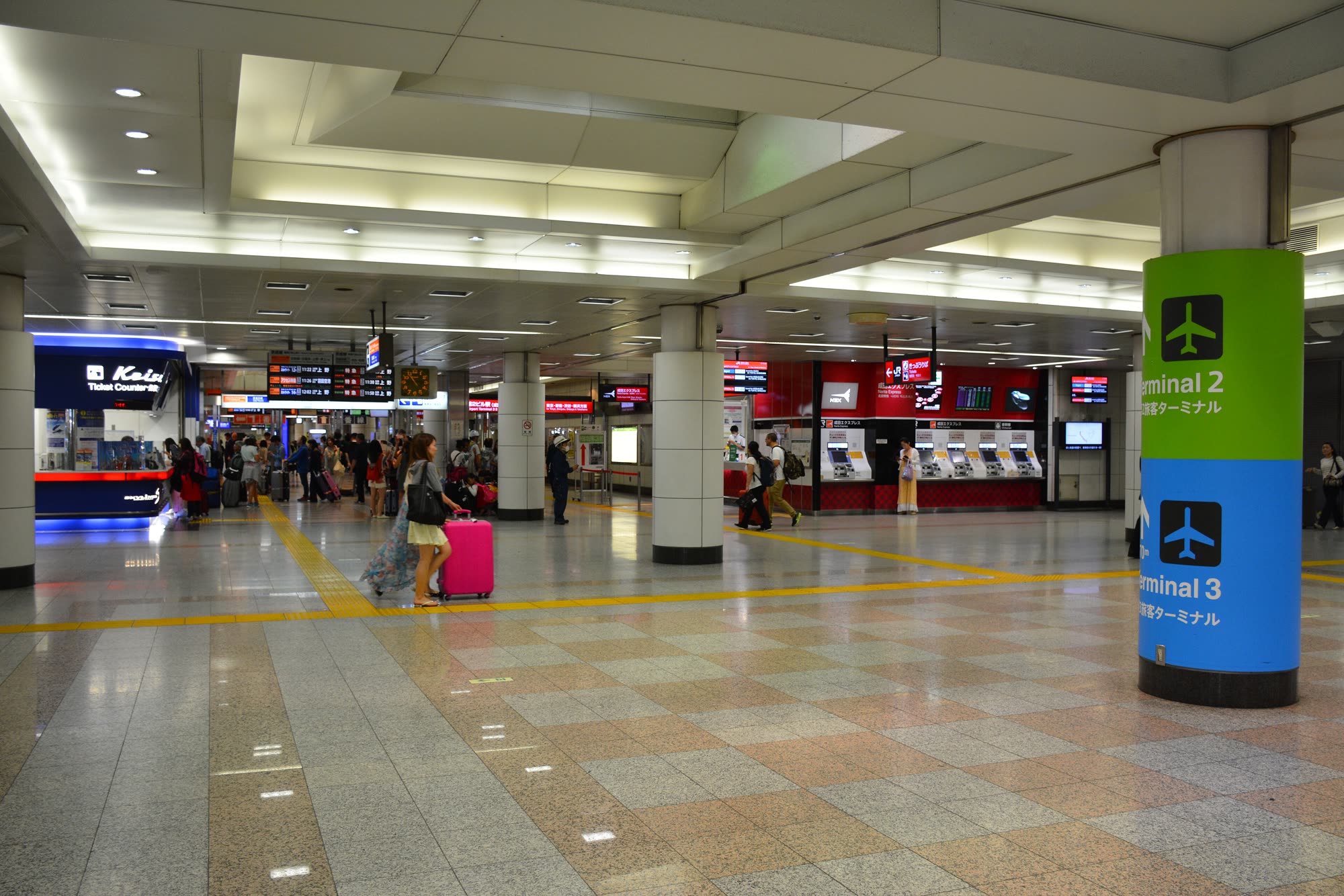
Family luggage at the airport — the gear decisions start before you fly. Photo: Cheng-en Cheng (2015), CC BY-SA 2.0.
The kids’ luggage that actually works is the one sized to your airline’s cabin rules and light enough for the child who will pull it. This is a researched guide based on published specifications and current airline policies, not hands-on testing.
Airline cabin-size limits, from the official pages
Before buying anything, know the size your airline allows, because a kids’ case that fits one carrier will not fit another. These are the current published limits; policies change, so check the airline directly.
| Airline | Free small bag | Larger cabin bag |
|---|---|---|
| British Airways | 40 x 30 x 15cm hand bag | 56 x 45 x 25cm cabin bag |
| easyJet | 45 x 36 x 20cm under-seat bag | 56 x 45 x 25cm large cabin bag (paid unless included) |
| Ryanair | 40 x 30 x 20cm personal bag | 55 x 40 x 20cm 10kg bag with Priority |
Children have the same cabin allowance as the adult whose booking they are on, so a child’s case must fit the same sizer. A case that exceeds the free small-bag limit either goes in the hold at a charge or must be booked as the larger cabin bag, which is why measuring the case, wheels and handles included, matters.
Ride-on versus backpack versus trolley
Each style solves a different problem, and the best choice depends on your child’s age and how far you walk.
Ride-on cases
Ride-on cases such as the Trunki entertain a tired child and carry around 18 litres, but the child who rides it is not pulling it, so an adult still manages it at speed. They suit ages three to six. The current Trunki line-up includes the classic Terrance, character designs such as Frank the Fire Truck and Cassie the Cat, and the Glide version with smoother castor wheels; all share a 46 x 20.5 x 31cm footprint, an 18-litre capacity and a 50kg ride-on limit, with a five-year guarantee.
Backpacks
A child-sized backpack is the most practical for actually carrying their own things, keeps hands free, and fits the free under-seat allowance on most airlines. They suit school-age children best and pack more usable space than a hard ride-on case of the same footprint.
Trolley cases
A small wheeled trolley, such as the Samsonite Disney and Sammies uprights at around 45cm, is easier for an older child to pull over long concourses and survives more trips than a ride-on. Samsonite’s Disney range includes 45cm cabin-size uprights, the Dream2Go ride-on, and character collections from Mickey and Minnie Mouse to Spider-Man and 101 Dalmatians.
Age guidance
| Age | What works | Why |
|---|---|---|
| 2-3 | No case; parent carries, or a ride-on for fun | Too young to manage luggage alone |
| 3-6 | Ride-on case (Trunki) or a small backpack | Ride-on entertains; backpack teaches carrying |
| 6-10 | Small trolley or cabin-size upright | Can pull their own case reliably |
| 10+ | Cabin-size trolley, adult-sized allowance | Manages weight and wheels independently |
Packing tips
Pack the child’s case with the things they will need in the cabin: a change of clothes, snacks, a small toy and headphones. Keep liquids to the security limits and put the heaviest item, usually shoes, at the wheel end so the case does not tip. Label everything, and put a parent’s phone number inside the case rather than on the outside where anyone can read it.
Finally, weigh the packed case before you leave. A child who cannot lift their own case onto a security belt will hand it straight back to you, and a case packed to the brim is the fastest route to an oversized-bag charge at the gate. Leave slack for the return journey, when souvenirs and dirty washing always expand to fill the space.
What to look for in a kids’ case
Weight is the first thing, because a child will not pull a case that is already heavy empty. Look for a case under about 2kg, smooth-rolling wheels, and a handle that suits the child’s height. Hard shells survive being sat on and dragged, while soft cases squeeze into sizers more forgivingly. Whichever you choose, check the stated dimensions against your airline’s sizer with the wheels included, which is where most returns happen.
Finally, choose a colour or print your child recognises instantly, because a distinctive case is far easier to spot at baggage reclaim than another black one.
Ride-on cases in detail
The Trunki dominates this category in the UK, and its design sets the template: a hollow plastic body the child sits on, a tow strap for adults, and a seatbelt for a favourite toy. It holds 18 litres, weighs 1.7kg and is rated for riders up to 50kg, with a recommended age of three to six. The current range runs from the classic Terrance to character and animal designs and the Glide version with smoother castor wheels. The honest limit is speed: a child riding is a child not walking, so allow extra time, and remember the 46cm length sits outside the free small-bag sizer on easyJet and Ryanair.
Backpacks and trolleys in detail
A child’s backpack wins on practicality because it keeps both hands free and almost always fits the free under-seat allowance, making it the least likely to be taken off you at the gate. Trolley cases win on distance and durability, and the Samsonite Disney and Sammies uprights at around 45cm are sized as cabin luggage with character prints that make a child actually want to manage them. For a trip with several flights and long concourses, a trolley plus a small backpack covers the child’s things without an extra hold bag.
Luggage for babies and toddlers
Under two, a child does not need their own case: pack their things in the parent’s bag and use the free changing-bag allowance most airlines give for a lap infant. Between two and four, a small backpack with a snack, a toy and a change of clothes gives them a sense of involvement without adding weight you will end up carrying. Save the ride-on or trolley for the ages when they can genuinely manage it.
FAQ
What size suitcase can a child take as cabin baggage?
A child’s case must fit the same sizer as the adult whose booking they are on. That is a 40 x 30 x 15cm hand bag and 56 x 45 x 25cm cabin bag on British Airways, a 45 x 36 x 20cm under-seat bag and 56 x 45 x 25cm large cabin bag on easyJet, and a 40 x 30 x 20cm personal bag with a 55 x 40 x 20cm Priority bag on Ryanair. Measure wheels and handles.
Are ride-on suitcases allowed as hand luggage?
Usually yes, but check the airline, because their dimensions sit near the limit. The Trunki is 46cm long, which fits a British Airways or easyJet large cabin bag allowance but exceeds the free small-bag sizers on easyJet and Ryanair. Treat ride-on cases as cabin luggage only where the airline’s stated size allows it.
What age should a child have their own suitcase?
From around six, when they can pull a small trolley reliably. Between three and six a ride-on case is more about entertainment than independence, and under three they rarely need their own case at all.
If the trip involves a baby as well, our best pushchairs for travel comparison covers the other half of the airport, and our holidays abroad guides plan the destination. For a UK break, see UK family hotels.